
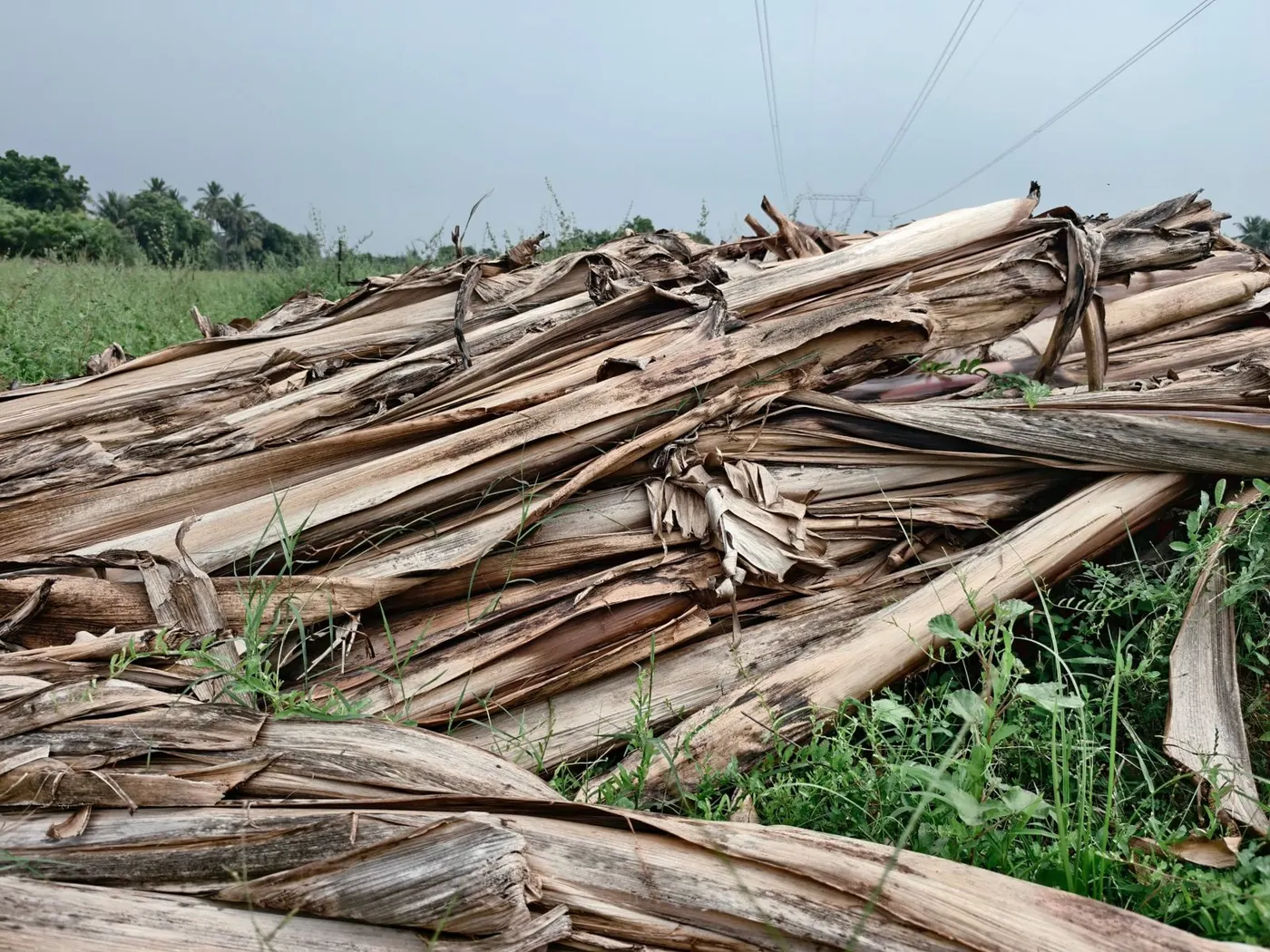
India grows more bananas than any other country. Every bunch comes from a plant whose stem is cut down after harvest, and that leaves behind a huge amount of banana stem waste: tens of millions of tonnes a year, spread across farms from Maharashtra to Tamil Nadu.
This guide explains what banana stem waste is, how much of it India produces state by state, what usually happens to it, and how it can be turned into useful products, including the growing medium we make at Banraw.
What is banana stem waste?
The "trunk" of a banana plant is not wood. It is a pseudostem: a column of tightly wrapped leaf sheaths that is mostly water and fibre. Each pseudostem carries a single bunch of bananas. Once the bunch is harvested, the stem will never fruit again, so farmers cut it down to make room for the next shoot growing from the same root.
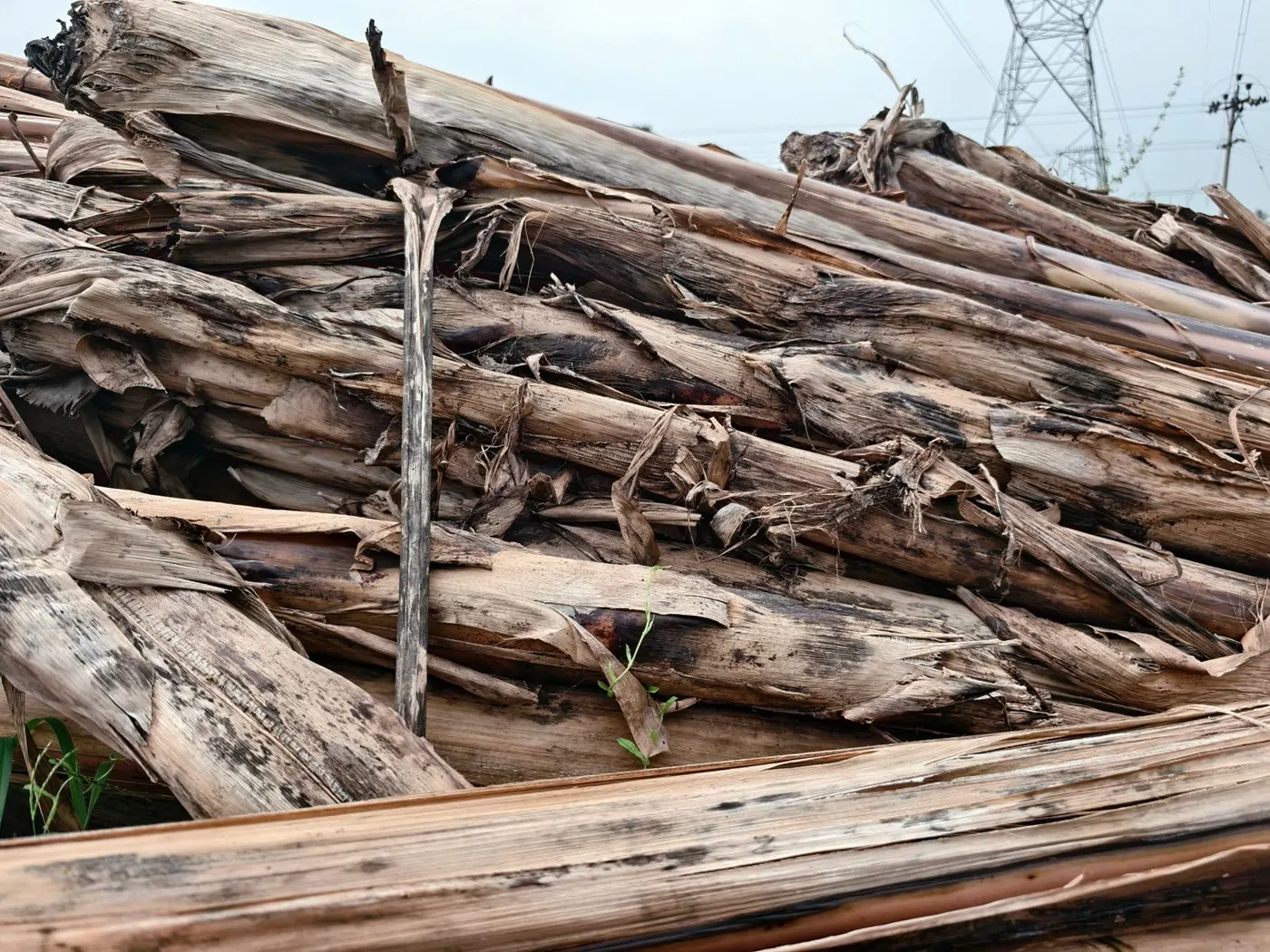
Field studies in India have measured about 13 to 14 kg of pseudostem per plant, and 33 to 39 tonnes of plant residue left on each hectare after harvest. Add the leaves, and banana is one of the heaviest crop residues a farmer has to deal with.
How much banana stem waste does India produce?
A widely cited study from the Indian Institute of Horticultural Research put India's banana pseudostem waste at about 30 million tonnes a year. Banana production has grown since then. Using the latest state figures and about one tonne of stem and leaf residue for every tonne of fruit, we estimate that India now generates roughly 39 million tonnes of banana stem waste every year.
The map below shows where that waste is produced. Darker states produce more.
Estimated banana stem waste by state
Million tonnes (Mt) of fresh stem and leaf left after harvest each year. Tap or hover over a state.
Top 10 states
Which states produce the most banana stem waste?
Banana farming is concentrated in a handful of states. The top five together account for about 67% of India's banana stem waste:
- Maharashtra, about 6.5 million tonnes. Jalgaon district is India's best-known banana belt, with large plantations of Grand Naine.
- Andhra Pradesh, about 5.8 million tonnes. Banana is grown widely in the Godavari delta and the Rayalaseema districts.
- Tamil Nadu, about 5.1 million tonnes. Farms in Theni, Tiruchirappalli, Thoothukudi, Coimbatore and Erode grow both table and cooking varieties. Erode is where Banraw collects its stems.
- Uttar Pradesh, about 4.7 million tonnes. Production has grown quickly in the eastern districts.
- Gujarat, about 4.0 million tonnes. Most banana farms are in the south and centre of the state.
Karnataka, Madhya Pradesh, Bihar, West Bengal and Assam each add another one to three million tonnes. Wherever bananas are grown, stems are cut after every harvest, all year round.
What happens to banana stems after harvest?
A single fresh pseudostem can weigh more than a person, and a hectare can hold a few thousand of them. Moving them takes time, labour and transport, which farmers rarely have to spare between crops. So most banana stem waste ends up in one of three places:
- Left to rot in the field. Decaying stems can shelter pests such as the banana pseudostem weevil and spread disease to the next crop.
- Burned. Burning clears the field quickly but releases smoke and destroys a useful material.
- Dumped along roads, canals and field edges, where it slowly breaks down.
Only a small share is collected and used. That is a lost opportunity, because banana stems are full of strong, renewable fibre.
Uses of banana stem waste
Banana stems have many uses once they are collected:
- Banana fibre for rope, handicrafts, paper and textiles
- Compost and liquid fertiliser from the soft inner tissue and sap
- Food: the tender inner core is cooked as a vegetable in South India
- Packaging and boards made from pressed fibre
- Growing media for greenhouses, nurseries and home gardens
Growing media is one of the few uses that can take in large volumes of stems, which makes it a practical way to deal with banana stem waste at scale.
From banana stem waste to Banraw Peat
At Banraw, we collect banana stems from partner farms around Erode, Tamil Nadu. At our manufacturing unit, the stems are shredded, dried and graded into a clean, fibrous material, then pressed into compact formats as Banraw Peat, a growing medium made from banana stem.
The open fibre holds water well while leaving room for air around the roots. It is a renewable alternative to peat moss and works alongside or in place of coco peat. Banraw Peat comes in four formats:
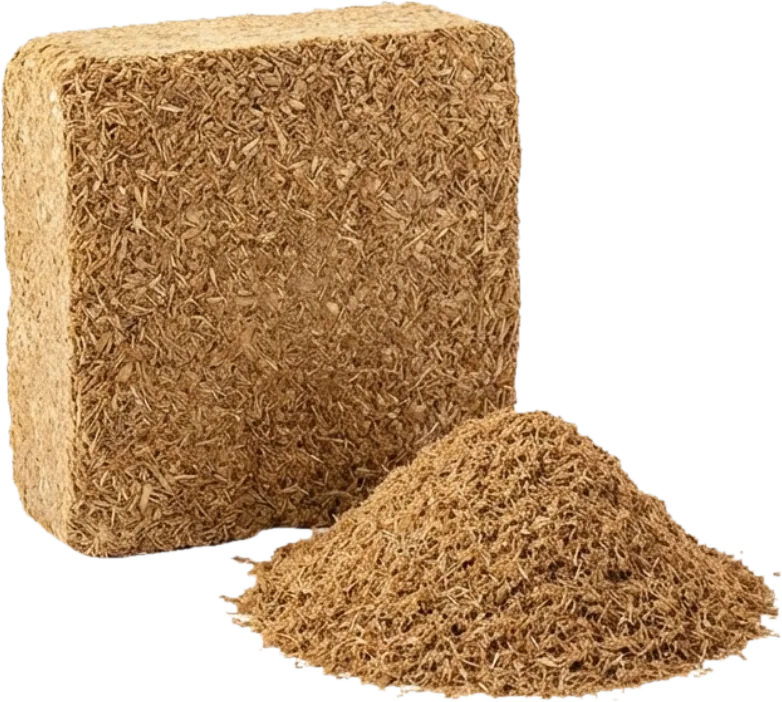 5 kg blocksExpands to about 75 L
 Open-top slabsFor hydroponic crops
 Open-top grow bagsReady to plant
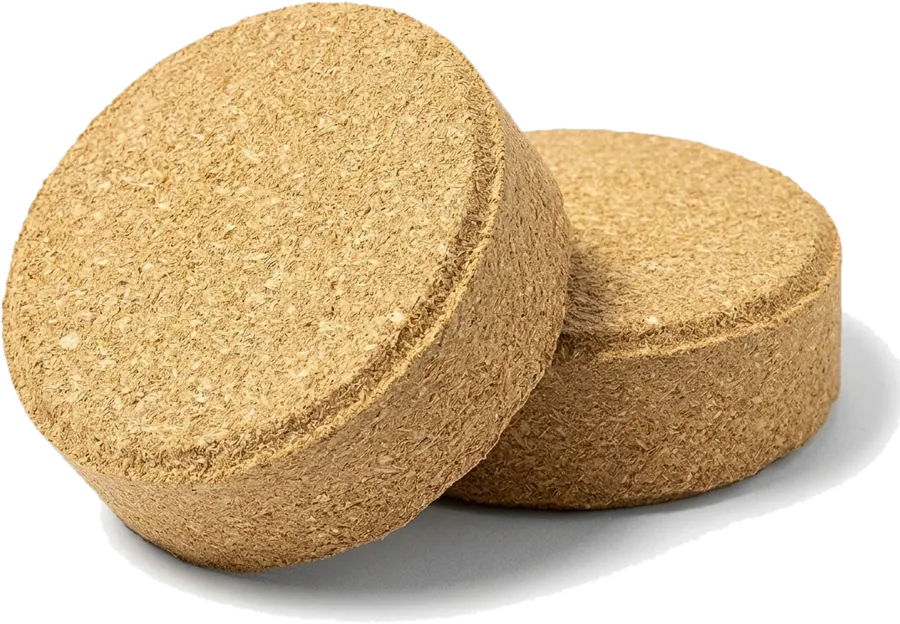 DiscsFor pots and seedlings
Every block, slab, grow bag and disc starts as a banana stem that has already given its fruit. Farmers earn from a material they would otherwise have to clear away, fewer stems are burned or left to rot, and growers get a renewable substrate.
Frequently asked questions
What is banana stem waste?
Banana stem waste is the pseudostem, the soft trunk of the banana plant, that is cut down after the bunch is harvested. Each stem fruits only once, so every harvest leaves stems behind.
How much banana stem waste is produced in India?
An Indian study estimated about 30 million tonnes of banana pseudostem waste a year. Based on current state production, we estimate the figure is now around 39 million tonnes a year.
Which state produces the most banana stem waste?
Maharashtra, Andhra Pradesh and Tamil Nadu produce the most, followed by Uttar Pradesh and Gujarat. Together, the top five states account for about two-thirds of the total.
What is banana stem waste used for?
Banana stems can be used for fibre, paper, textiles, compost, liquid fertiliser, food and growing media. Banraw turns banana stems into Banraw Peat, a growing medium for greenhouses, nurseries and gardens.
Is banana stem a good alternative to peat moss and coco peat?
Yes. Processed banana stem fibre holds water and air well and is renewable, which makes it a sustainable alternative to peat moss. Growers can use it on its own or alongside coco peat.
How we estimated the figures. State banana production is the latest year available on CEIC's horticulture statistics, rounded. Field studies report 33 to 39 tonnes of residue per hectare after harvest, close to the average banana yield in India, so we use about one tonne of stem and leaf residue per tonne of fruit. Actual amounts vary by variety, season and farm practice. Sources: Shivashankar, Nachane and Kalpana, Journal of Horticultural Sciences, 2006; CEIC, banana production by state; National Horticulture Board, banana.


