Rockwool has been a standard growing medium in greenhouses and hydroponics for decades. It is clean, uniform and easy to automate. But it also has real drawbacks, for growers, for the people who handle it, and for the environment. Here are the main disadvantages of rockwool, and a new, renewable growing medium that avoids them.
What is rockwool?
Rockwool, also called stone wool or mineral wool, is made by melting volcanic rock such as basalt, often with chalk or slag, in a furnace at around 1,500 °C. The molten rock is spun into thin fibres, bound together and pressed into cubes, blocks and slabs. Growers like it because it is sterile, holds water and air in a predictable way, and every slab is much the same as the next.
7 disadvantages of rockwool
1. It starts with a high pH
New rockwool is alkaline, with a pH well above the slightly acidic range most crops prefer. Before planting, growers have to soak and condition it in pH-adjusted water, often for hours. If this step is skipped or rushed, young plants struggle to take up nutrients.
2. There is no buffering, so mistakes show up fast
Rockwool is inert. It holds no nutrients and does almost nothing to steady pH or salt levels. That gives experienced growers precise control, but it also means that a problem with the nutrient mix or the irrigation reaches the roots straight away, with little margin for error.
3. It can stay too wet at the base
Rockwool holds a lot of water, and moisture collects at the bottom of a slab while the top looks dry. Growers who judge by the surface can easily overwater, leaving the lower root zone short of oxygen and open to root rot, while the damp surface can grow algae.
4. The fibres and dust irritate skin, eyes and lungs
Dry rockwool sheds fine fibres and dust. Cutting or handling it can cause itching and irritation, and the dust should not be breathed in. Most guidance recommends gloves, long sleeves, eye protection and a dust mask, and wetting the material before working with it.
5. Making it uses a lot of energy
Melting rock at around 1,500 °C takes a great deal of energy, usually from fossil fuels. Every slab carries that energy cost before it reaches the greenhouse.
6. It does not break down after use
Rockwool is mineral fibre, so it does not rot. Used slabs can sometimes be reused or sent to take-back and recycling schemes, but much of it ends up in landfill, where it stays. For large greenhouses, disposing of tonnes of used substrate every year is a real cost.
7. It is bulky to store and ship
Rockwool cannot be compressed much, so slabs take up a lot of space in containers, trucks and warehouses. For growers who import their substrate, freight is a large part of the price.
Rockwool vs Banraw Peat at a glance
| Rockwool | Banraw Peat | |
|---|---|---|
| Made from | Rock melted at about 1,500 °C | Banana stems left after harvest |
| Renewable | No | Yes |
| Before planting | Soak and adjust pH | Add water to expand; every batch is tested |
| Handling | Fibres and dust can irritate | Soft plant fibre |
| Shipping | Bulky | Compressed; expands up to 15 L per kg |
| After use | Does not break down; often landfilled | Breaks down naturally; can be composted |
A new growing medium: Banraw Peat
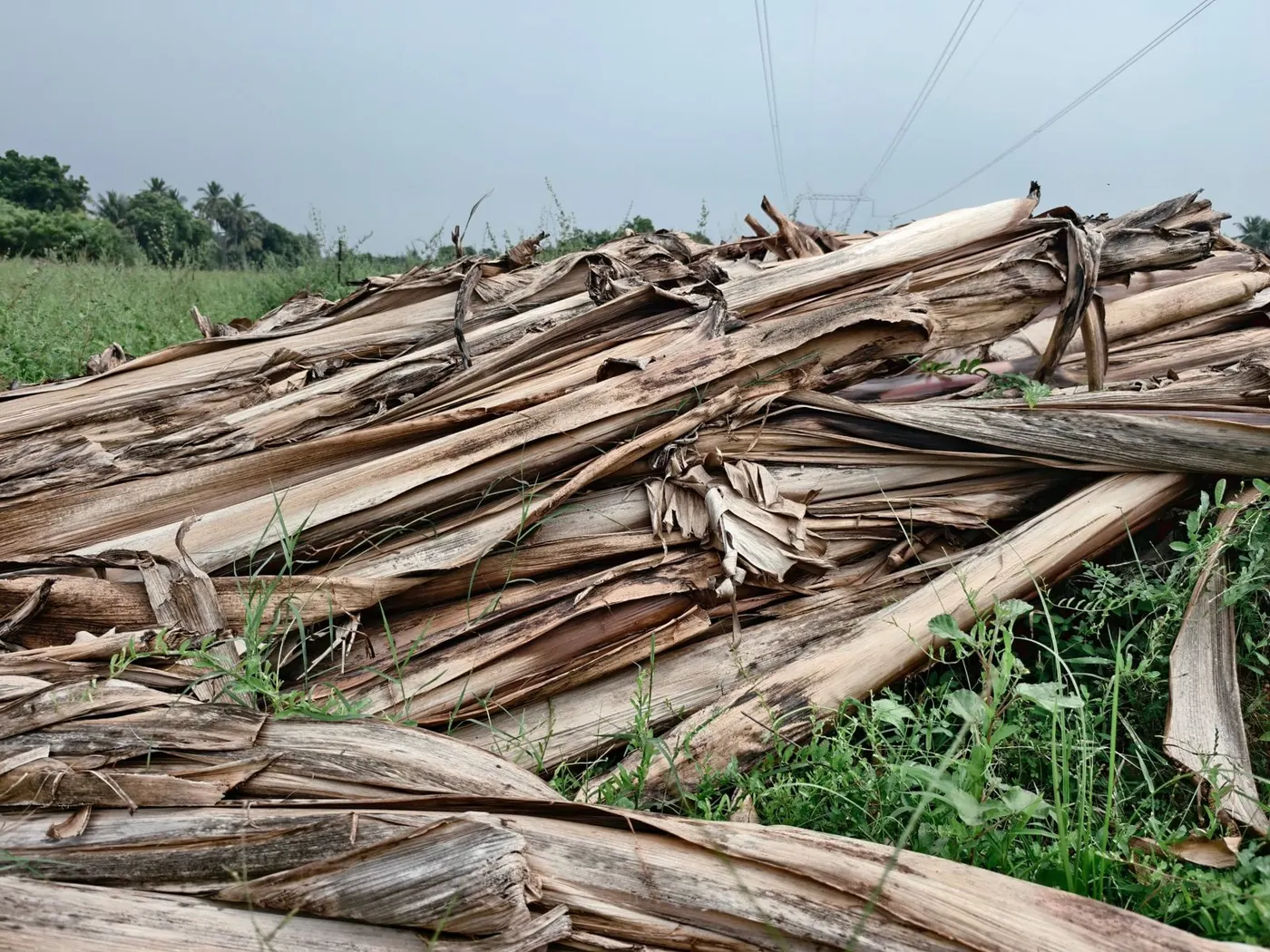
Banraw Peat is a new growing medium made from the banana plant. After every banana harvest, the stem is cut down and usually left to rot or burned. India produces tens of millions of tonnes of this banana stem waste each year. At Banraw, we collect these stems from farms around Erode, Tamil Nadu, then shred, dry and grade them into a clean, fibrous substrate.
The long, open fibres hold water while draining freely, so roots get both moisture and air. Banraw Peat is compressed for shipping, expands with water, and breaks down naturally after use, so there is no slab waste to send to landfill. It suits seedlings, nursery plants and greenhouse crops, and can be used on its own or blended with coco peat or perlite. If you are new to substrates, start with what a growing medium is and why growers use one.
Banraw Peat comes in four formats, including open-top slabs for growers moving away from rockwool:
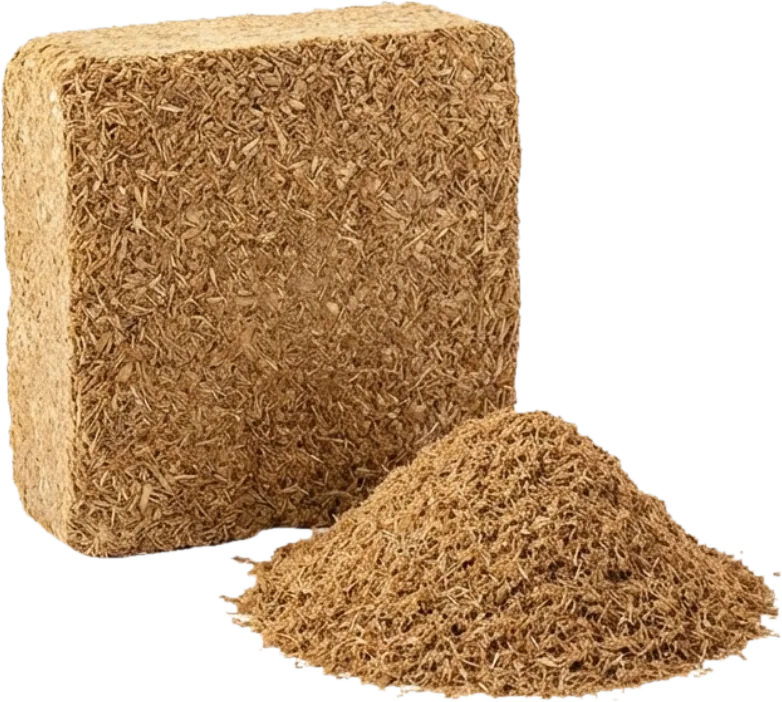 5 kg blocksExpands to about 75 L
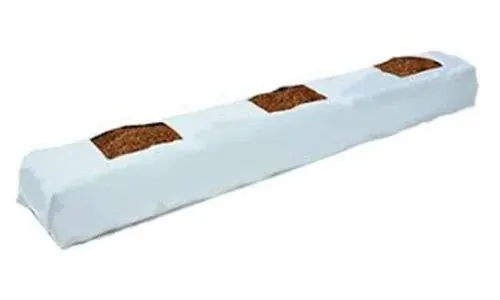 Open-top slabsA rockwool slab alternative
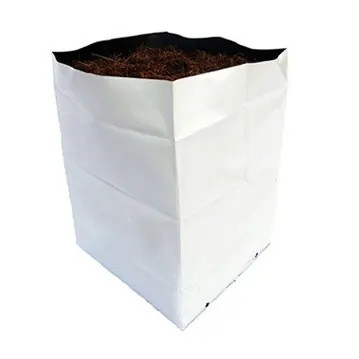 Open-top grow bagsReady to plant
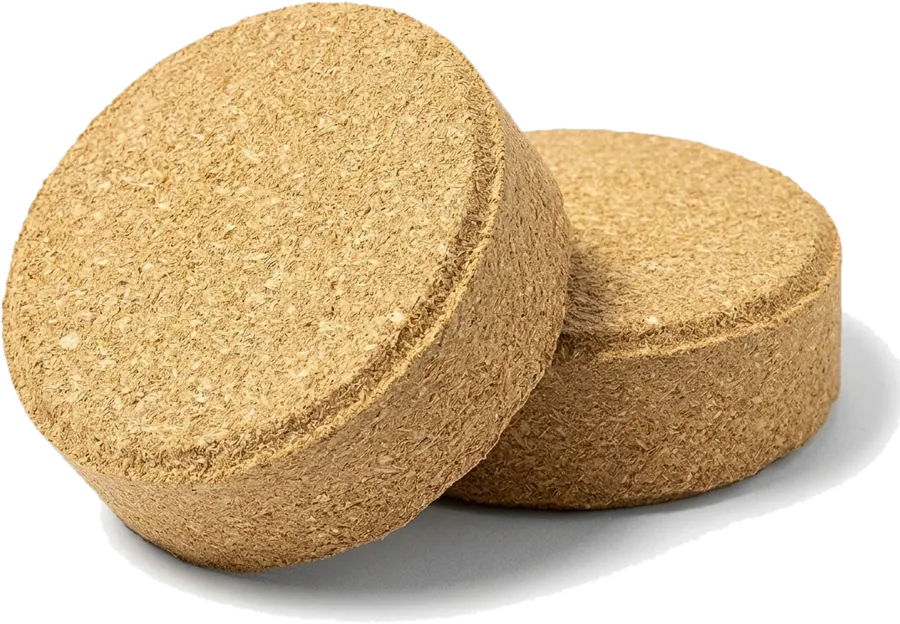 DiscsFor propagation and pots
Is rockwool still the right choice?
Rockwool will stay in many greenhouses because growers know how to manage it and their systems are built around it. But if you want to cut substrate waste, avoid handling mineral fibre, or reduce freight, a plant-based medium is worth a trial. Grow a few rows in Banraw Peat alongside your current slabs and compare root health, water use and yield under your own conditions. We are happy to send samples.
Frequently asked questions
What are the main disadvantages of rockwool?
Rockwool starts with a high pH and must be soaked and adjusted before use, it has almost no buffering, it can stay waterlogged at the base, its fibres and dust irritate skin, eyes and lungs, it takes a lot of energy to make, and it does not break down after use.
Is rockwool bad for the environment?
Rockwool is made by melting rock at about 1,500 °C, which uses a lot of energy, and used slabs do not biodegrade. Some can be recycled through take-back schemes, but much of it ends up in landfill.
Why does rockwool need to be soaked before use?
New rockwool has a high pH, higher than most crops like. Growers soak it in pH-adjusted water, usually around pH 5.5, before planting so that roots can take up nutrients properly.
Is rockwool safe to handle?
Dry rockwool releases fine fibres and dust that can irritate the skin, eyes and lungs. Wear gloves, a dust mask and eye protection when cutting or handling it, and wet it first to keep dust down.
What can I use instead of rockwool?
Plant-based growing media such as coco peat and banana fibre are common rockwool alternatives. Banraw Peat is a new growing medium made from banana stem that comes as blocks, slabs, grow bags and discs, and breaks down naturally after use.
Sources. Epic Gardening, Is rockwool harmful?; Jardinería On, Rock wool as a substrate; FloraFlex, The dos and don'ts of using rockwool.